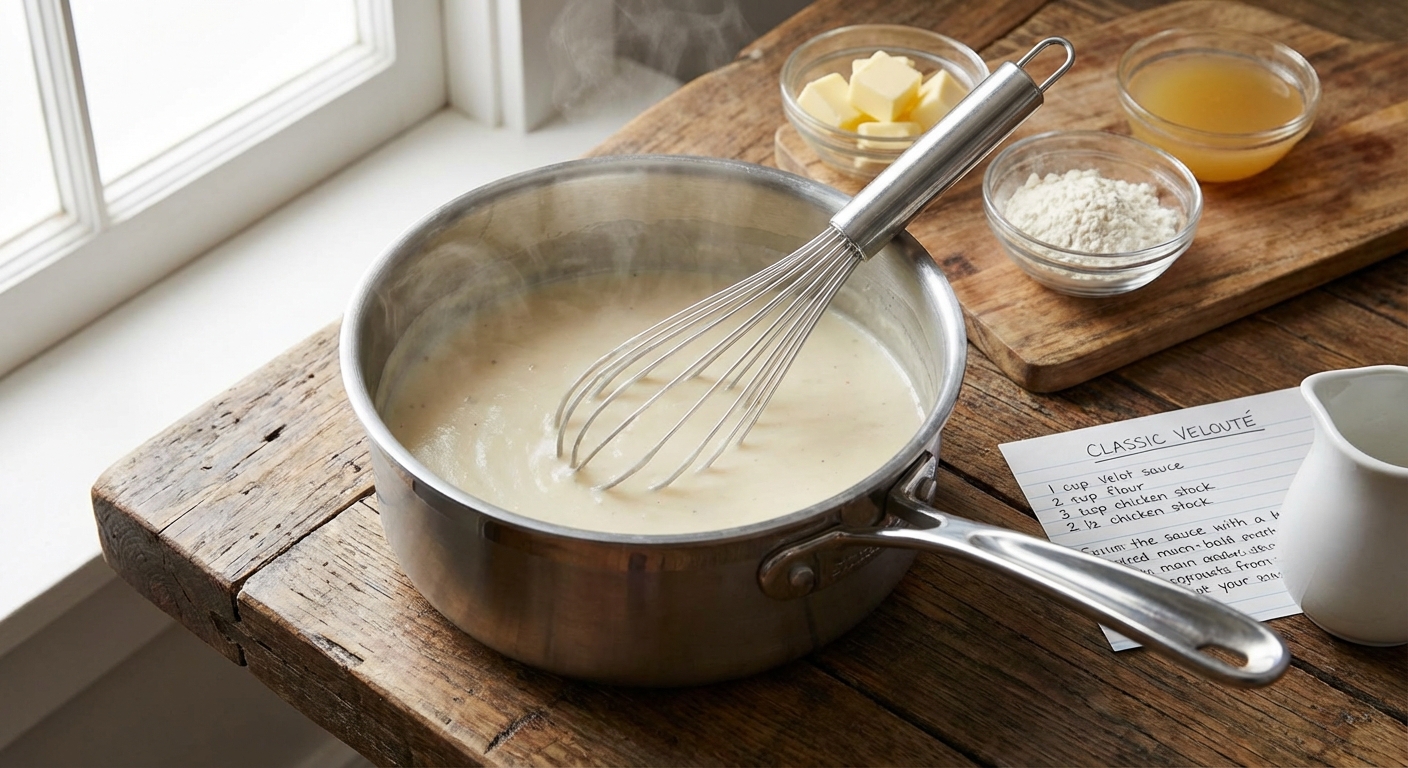
Hello, food lovers!
Have you ever heard about fancy French cooking and thought it was too hard for you? I have a little secret for you. Some of the most famous and delicious sauces are actually very easy to make at home. Today, we are going to learn how to make one of them. It is called Velouté (vel-oo-TAY).
This beautiful sauce is one of the five “mother sauces” of French cuisine. That’s a fancy way of saying it’s a basic sauce that you can use to create many other amazing sauces. It’s light, creamy, and can make a simple meal feel special. In this guide, I will walk you through everything you need to know. We will make a perfect classic velouté sauce together, step by simple step. No special tools or chef skills needed! Let’s get started.
What Is a Classic Velouté Sauce Anyway?
So, what exactly is this sauce? Think of it as a simple, elegant white sauce. A **classic velouté sauce** is made from just two main things: a light-colored stock and a roux. That’s it!
A roux is just a mix of melted butter and flour cooked together. It’s what makes the sauce thick and creamy. The stock gives the sauce its main flavor. The kind of stock you use will change the final taste of your velouté.
You might have heard of another famous white sauce called Béchamel. Béchamel is very similar, but it uses milk instead of stock. Velouté is different because it uses a clear, light stock like chicken, fish, or vegetable stock. This gives it a lighter, more savory flavor that is perfect for many different kinds of dishes. Because it’s a mother sauce, you can add other ingredients like herbs, cream, or mushrooms to turn it into a brand-new sauce.
The Simple Ingredients for a Perfect Velouté Sauce
One of the best things about making velouté is that you probably have most of the ingredients in your kitchen right now. You only need four basic things to get started. Keeping it simple is the key to a great sauce.
Here’s what you will need:
- Butter: Unsalted butter is best. This lets you control how much salt goes into your sauce. If you only have salted butter, just be careful when you add more salt later.
- Flour: Simple, all-purpose flour works perfectly. This is what will thicken your sauce.
- Stock: This is where the flavor comes from! Use a light-colored stock. Chicken stock is very popular, but fish or vegetable stock also make a wonderful velouté. Make sure your stock tastes good on its own.
- Seasoning: A little salt and white pepper are all you need. White pepper is great because it won’t add little black specks to your beautiful, light-colored sauce.
| Ingredient | Amount | Simple Note |
|---|---|---|
| Unsalted Butter | 3 tablespoons | Helps control the saltiness. |
| All-Purpose Flour | 3 tablespoons | This thickens your sauce. |
| Light-Colored Stock | 2 cups | Chicken, fish, or vegetable stock works great. |
| Salt and White Pepper | To taste | White pepper keeps the color light. |
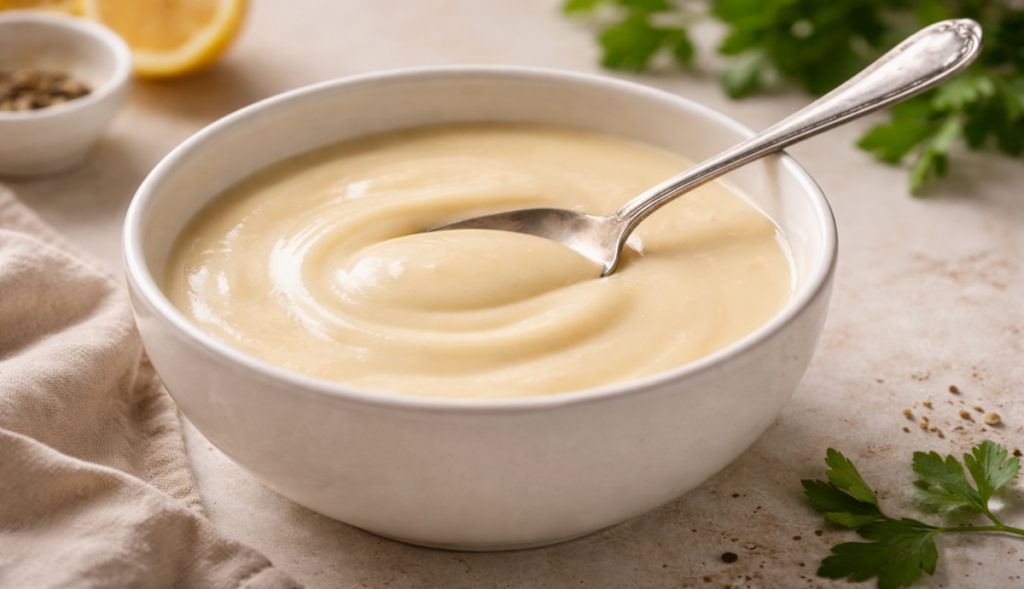
Step-by-Step Guide to Making Classic Velouté Sauce
Are you ready to make your own delicious sauce? It’s easier than you think. Just follow these simple steps, and you’ll have a smooth and creamy velouté in no time. The most important thing is to take your time and not rush.
Step 1: Make the Roux
First, we need to make the roux. This is the base of our sauce. Get a medium-sized saucepan and put it on your stove over medium-low heat. Add your butter and let it melt completely. Once the butter is melted and bubbly, add all of the flour at once. Start stirring right away with a whisk or a wooden spoon. You want to mix the flour and butter together until it forms a smooth paste. Keep cooking this paste for about two minutes, stirring often. This important step cooks the raw taste out of the flour. You want your roux to be a very light, blonde colour, not brown.
Step 2: Slowly Add the Stock
This is the most important step for getting a smooth, lump-free sauce. It’s a good idea to warm up your stock a little bit in another pot or in the microwave. It doesn’t need to be boiling, just warm. Now, start adding the warm stock to your roux, just a little bit at a time. As you pour a little stock in, whisk, whisk, whisk! Keep whisking until the sauce is completely smooth before you add more stock. Continue this process, adding a little stock and whisking until it’s all mixed in. Taking your time here will pay off!
Step 3: Simmer and Thicken
Once all the stock is mixed in and your sauce is smooth, turn the heat up just a little bit to bring it to a gentle simmer. A simmer means you see tiny bubbles coming to the surface. Let the sauce simmer for about 10 to 15 minutes. This helps the sauce to thicken up nicely and allows the flavors to come together. Be sure to stir it every now and then so it doesn’t stick to the bottom of the pan.
Step 4: Season and Serve
After your sauce has thickened, it’s time to finish it. Turn off the heat. Taste the sauce first, and then add salt and white pepper until it tastes just right to you. If your sauce has any small lumps, you can pour it through a fine-mesh strainer for a perfectly silky texture. Your **classic velouté sauce** is now ready to be used over chicken, fish, vegetables, or in your favorite casserole!
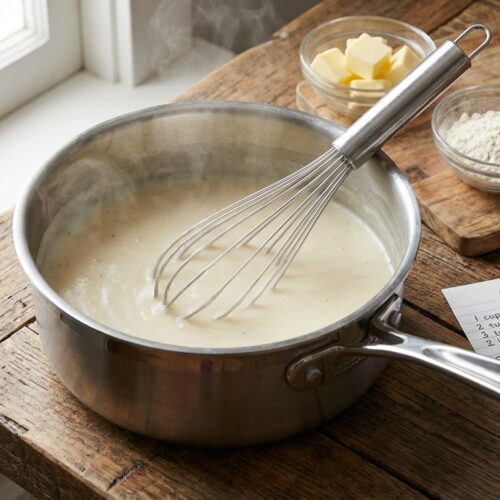
Classic Velouté Sauce
Equipment
- Medium saucepan
- Whisk
- Wooden spoon or silicone spatula
- Measuring cups + spoons
Ingredients
- 2 tablespoons butter
- 2 tablespoons all-purpose flour
- 2 cups light stock chicken, veal, or fish — traditionally chicken
- Salt to taste
- White pepper optional, for classic colour
Instructions
Step 1: Make the Roux
- First, we need to make the roux. This is the base of our sauce. Get a medium-sized saucepan and put it on your stove over medium-low heat. Add your butter and let it melt completely. Once the butter is melted and bubbly, add all of the flour at once. Start stirring right away with a whisk or a wooden spoon. You want to mix the flour and butter together until it forms a smooth paste. Keep cooking this paste for about two minutes, stirring often. This important step cooks the raw taste out of the flour. You want your roux to be a very light, blonde color, not brown.
Step 2: Slowly Add the Stock
- This is the most important step for getting a smooth, lump-free sauce. It’s a good idea to warm up your stock a little bit in another pot or in the microwave. It doesn’t need to be boiling, just warm. Now, start adding the warm stock to your roux, just a little bit at a time. As you pour a little stock in, whisk, whisk, whisk! Keep whisking until the sauce is completely smooth before you add more stock. Continue this process, adding a little stock and whisking until it’s all mixed in. Taking your time here will pay off!
Step 3: Simmer and Thicken
- Once all the stock is mixed in and your sauce is smooth, turn the heat up just a little bit to bring it to a gentle simmer. A simmer means you see tiny bubbles coming to the surface. Let the sauce simmer for about 10 to 15 minutes. This helps the sauce to thicken up nicely and allows the flavors to come together. Be sure to stir it every now and then so it doesn’t stick to the bottom of the pan.
Step 4: Season and Serve
- After your sauce has thickened, it’s time to finish it. Turn off the heat. Taste the sauce first, and then add salt and white pepper until it tastes just right to you. If your sauce has any small lumps, you can pour it through a fine-mesh strainer for a perfectly silky texture. Your **classic velouté sauce** is now ready to be used over chicken, fish, vegetables, or in your favorite casserole!
Choosing the Right Stock for Your Velouté Sauce
The magic of a velouté is that its flavor changes depending on the stock you use. This makes it incredibly useful for all kinds of meals. The type of stock you choose will create a specific type of velouté that pairs perfectly with your main dish.
| Stock Used | Name of Velouté | Best for These Dishes |
|---|---|---|
| Chicken Stock | Chicken Velouté | Chicken, turkey, pasta, and vegetables. |
| Fish Stock | Fish Velouté | Fish, shrimp, scallops, and seafood pasta. |
| Vegetable Stock | Vegetable Velouté | Vegetable dishes, gratins, and vegetarian meals. |
Using a good-quality stock is very important. Since the sauce has so few ingredients, the flavor of the stock really shines through. If you can, use homemade stock. If not, buy the best quality stock you can find at the store.
Helpful Tips for a Flawless Velouté Sauce
Here are a few extra tips to help you make the best velouté every single time. These little tricks can make a big difference!
- Warm Your Stock: Adding warm stock to a warm roux helps prevent lumps. Cold liquid hitting hot butter and flour can cause it to clump up.
- Whisk, Whisk, Whisk: A whisk is your best friend when making this sauce. It breaks up any potential lumps and makes the sauce smooth and airy.
- Low and Slow is the Way to Go: Don’t try to rush the process by using high heat. Cooking your roux and simmering your sauce on low heat gives you more control and better results.
- Don’t Be Afraid to Strain: Even experienced chefs get lumps sometimes! If your sauce isn’t as smooth as you’d like, simply pour it through a fine strainer before serving. No one will ever know.
Why Is My Velouté Sauce Lumpy? Common Questions
Making a **classic velouté sauce** is easy, but sometimes things can go a little wrong. Don’t worry! Here are some common problems and how to fix them.
My sauce is lumpy! What happened?
This is the most common problem. It usually happens if you add the stock too quickly or if the stock was too cold. To fix it, you can try whisking very hard for a minute or two. If that doesn’t work, pour the sauce through a strainer.
My sauce is too thin.
This is an easy fix! Just let the sauce simmer on low heat for a little longer. As the water evaporates, the sauce will naturally thicken. Just be sure to stir it so it doesn’t burn.
My sauce is too thick.
This is also an easy fix. While the sauce is on low heat, slowly whisk in a little more warm stock until it reaches the thickness you like.
| Pros (The Good Stuff) | Cons (Things to Watch For) |
|---|---|
| Very versatile base for many sauces. | Can taste bland if your stock is not good. |
| Light and creamy, not heavy. | Can get lumpy if you don’t whisk well. |
| Uses simple, everyday ingredients. | Needs your attention while cooking. |
Mastering the Classic Velouté Sauce: A Final Word
Congratulations! You now know the secret to making a beautiful and delicious **classic velouté sauce**. It’s a wonderful skill to have in the kitchen. Once you feel comfortable making the basic sauce, you can start to have fun with it. Try adding a squeeze of lemon juice to a fish velouté or some fresh herbs to a chicken velouté.
This simple sauce can make your everyday meals feel like they came from a fancy restaurant. It shows that great cooking doesn’t have to be complicated. It’s about using simple ingredients and a little bit of care to create something wonderful. So go ahead, give it a try, and enjoy your amazing homemade sauce!